
If you’re dealing with dry, itchy, inflamed skin that just won’t go away, you’re not alone. Millions of people struggle with eczema and other forms of dermatitis, often experiencing discomfort that disrupts daily life. At Clarus Dermatology, we offer personalized treatment plans to help you manage symptoms, restore skin health, and prevent flare-ups.
What Is Eczema and Dermatitis?
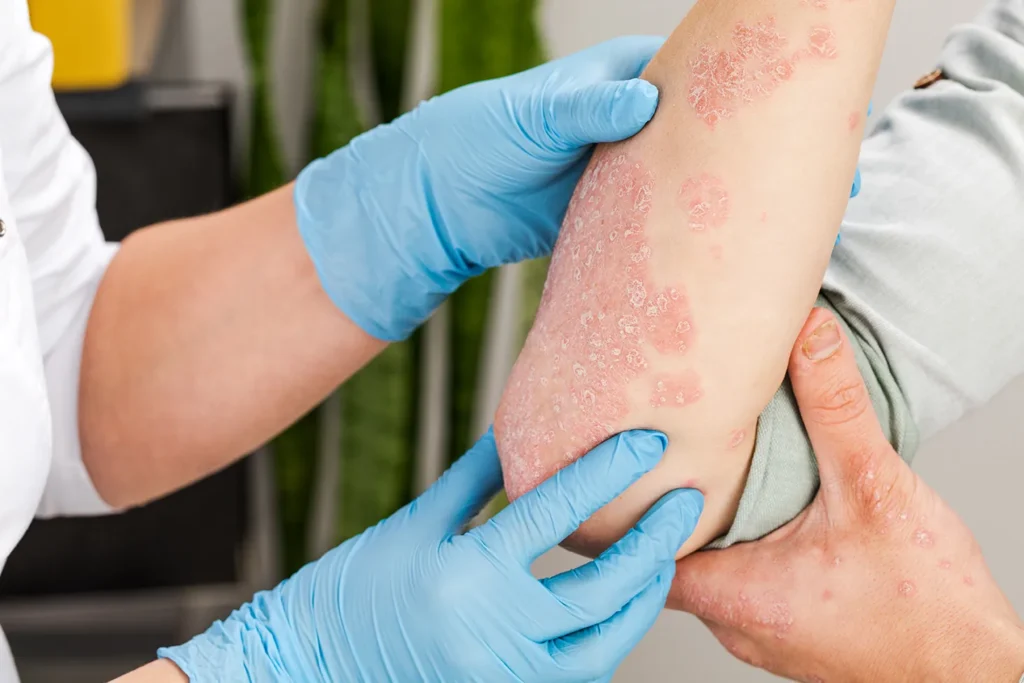
Eczema (also known as atopic dermatitis) is a chronic inflammatory skin condition that leads to dry, itchy, red, and sometimes cracked skin. It most often begins in childhood but can persist or develop in adulthood. Other common forms of dermatitis include:
- Contact dermatitis – caused by skin contact with allergens or irritants (e.g., nickel, fragrance, poison ivy)
- Seborrheic dermatitis – a scaly, oily rash typically found on the scalp, face, and chest
- Nummular dermatitis – coin-shaped patches of irritated skin
- Dyshidrotic eczema – small, itchy blisters on the hands and feet
No matter the type, expert diagnosis and treatment are key to managing symptoms and improving quality of life.
Common Symptoms
- Intense itching
- Red or brown patches
- Dry, sensitive skin
- Swelling or oozing
- Skin thickening or cracking from chronic scratching
Eczema can flare up periodically and may be triggered by factors like stress, allergens, harsh soaps, weather changes, or sweat.
Our Treatment Approach
There’s no one-size-fits-all treatment for eczema or dermatitis. That’s why we focus on individualized care based on your symptoms, age, medical history, and lifestyle.
1. Topical Medications
We often begin with prescription creams or ointments to control inflammation and itch:
- Topical corticosteroids – reduce inflammation and itching during flares
- Calcineurin inhibitors (e.g., tacrolimus, pimecrolimus) – non-steroid options for sensitive areas like the face
- Moisturizers and barrier repair creams – essential for daily maintenance and preventing future flares
2. Oral & Injectable Therapies
For moderate to severe eczema or when topical treatments aren’t enough:
- Oral antihistamines – help relieve itching and improve sleep
- Systemic corticosteroids – short-term use for severe flares
- Immunosuppressants (e.g., cyclosporine, methotrexate) – for chronic, difficult-to-control eczema
- Biologic therapy (Dupixent®) – a revolutionary FDA-approved injectable medication for moderate to severe atopic dermatitis that targets the immune system’s inflammatory pathways
3. Allergy & Patch Testing
For patients with suspected contact dermatitis, we may perform patch testing to identify specific allergens or irritants contributing to flare-ups. Avoiding known triggers can dramatically reduce symptoms.
4. Phototherapy
Narrowband UVB light therapy is a safe and effective option for chronic eczema, especially when topical treatments are not enough. It helps reduce inflammation and itching over time.
5. Daily Skin Care Plans
Education is key. We guide you in building an eczema-friendly skin care routine:
- Use fragrance-free cleansers and moisturizers
- Bathe in lukewarm water (not hot)
- Apply moisturizer within minutes of bathing (“soak and seal” method)
- Avoid known triggers (detergents, wool, sweat, allergens, etc.)
Why See a Dermatologist?
Over-the-counter products may help mild cases, but if your eczema is persistent, spreading, or interfering with daily life, it’s time to see a our dermatology providers. We can:
- Provide a clear diagnosis
- Customize a treatment plan based on your needs
- Monitor long-term care and offer advanced therapies
Start Healing Your Skin
Living with eczema or dermatitis doesn’t have to mean living with constant discomfort. With the right treatment and expert care, you can find relief and improve your skin’s health and appearance.
Schedule an appointment today to get started on a treatment plan that works for you.